Sandha Woodworks has commissioned new CNC nesting capacity and zero-joint edgebanding technology as part of an ongoing capital programme focused on dimensional repeatability and long-term durability in commercial casework.
Zero-Joint Edge Technology
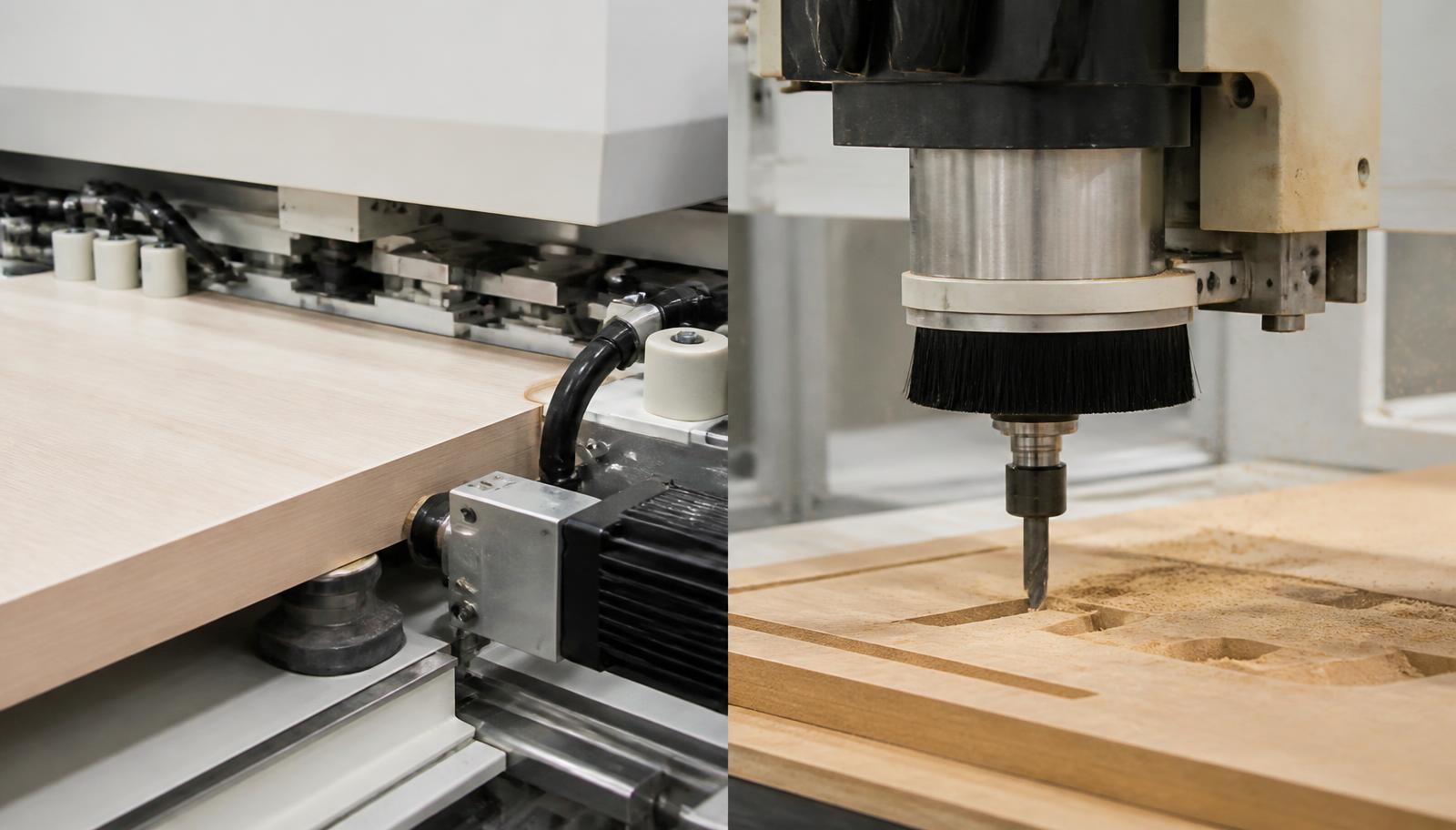
Conventional edgebanding relies on an adhesive layer between the panel edge and the banding, which remains visible as a fine glue line and represents the primary failure path for edge delamination in high-cleaning environments. Zero-joint processing fuses a co-extruded functional layer directly to the panel edge, producing a seamless, moisture-resistant transition with no adhesive line.
The performance difference is most significant in healthcare, education and food-service environments, where casework edges are exposed to repeated cleaning with aggressive chemical agents and where edge delamination is both a maintenance cost and an infection control concern.
Nesting Capacity
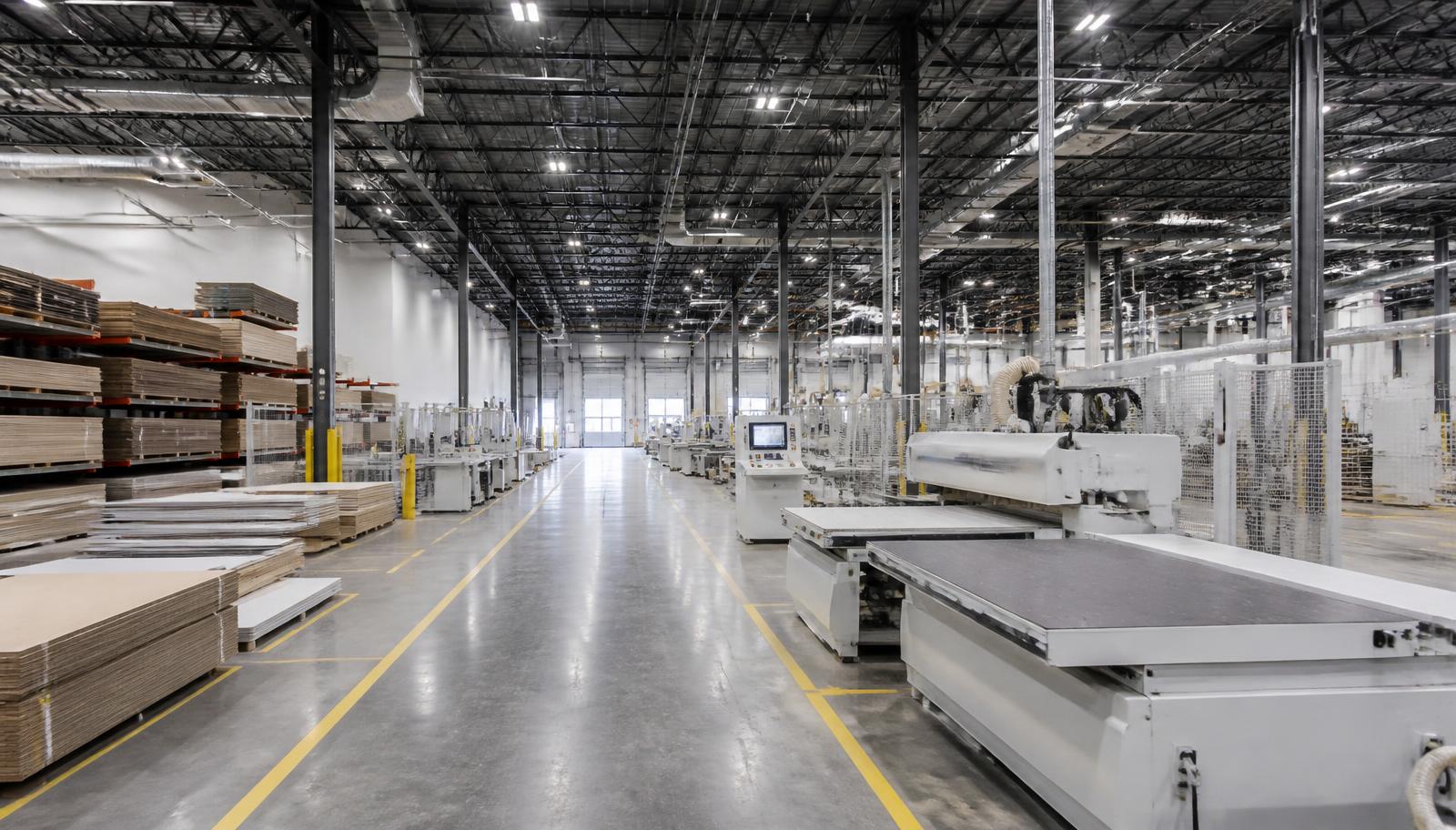
Additional CNC nesting capacity increases parallel throughput on parametric production released directly from the engineered model. On multi-site programmes this shortens the interval between fabrication release and assembly, and improves sheet yield through better optimization across concurrent projects.
Both investments support the organization's model-driven production approach, in which the engineered model — not an interpreted drawing — is the source of machining, bill of materials, labelling and assembly data.