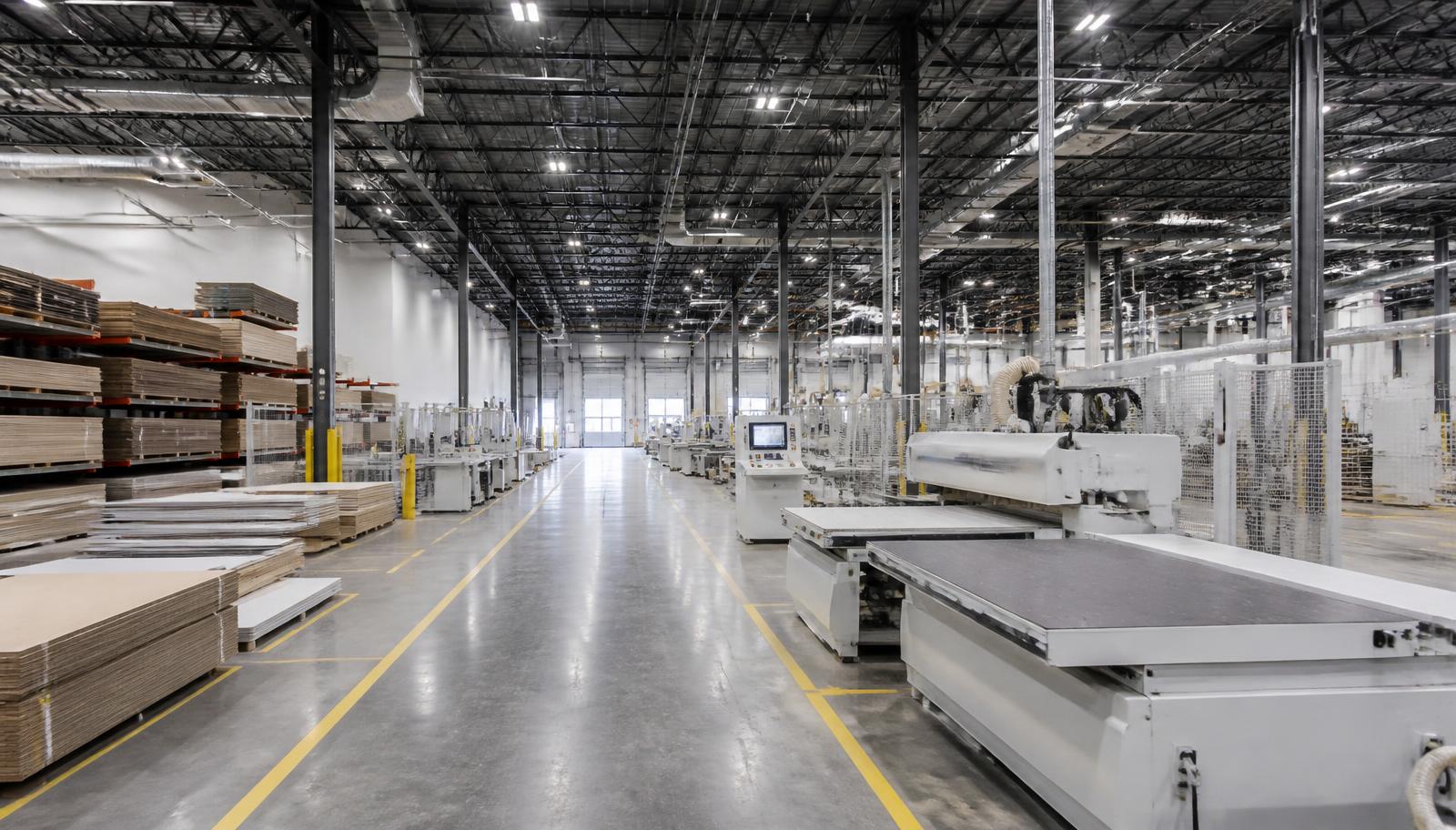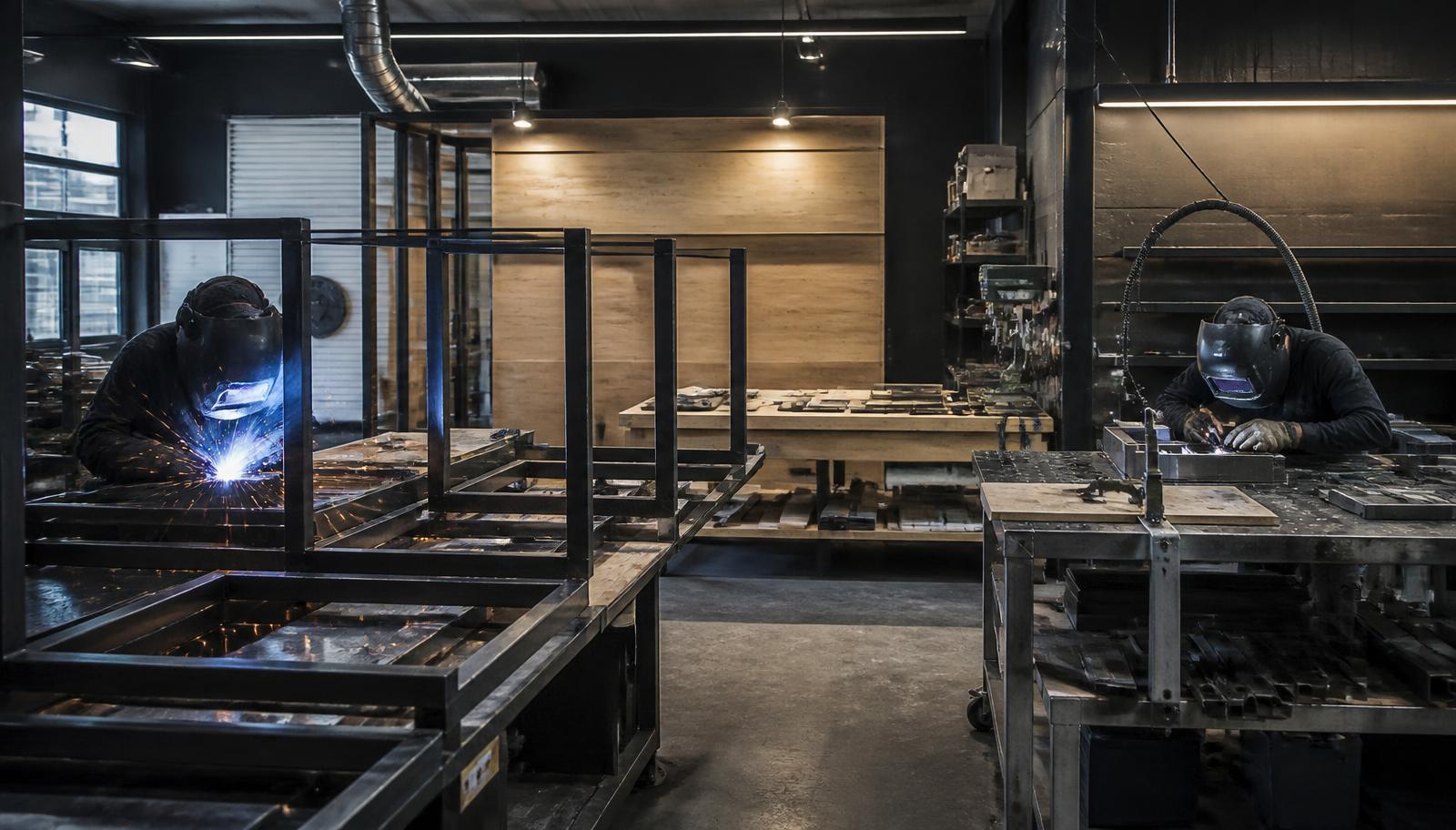
Manufacturing is often discussed through investment figures, economic forecasts and workforce statistics. Its daily realities, however, are found on the production floor — where engineering decisions become physical products, skilled trades meet advanced machinery, and delivery commitments depend on hundreds of coordinated decisions.
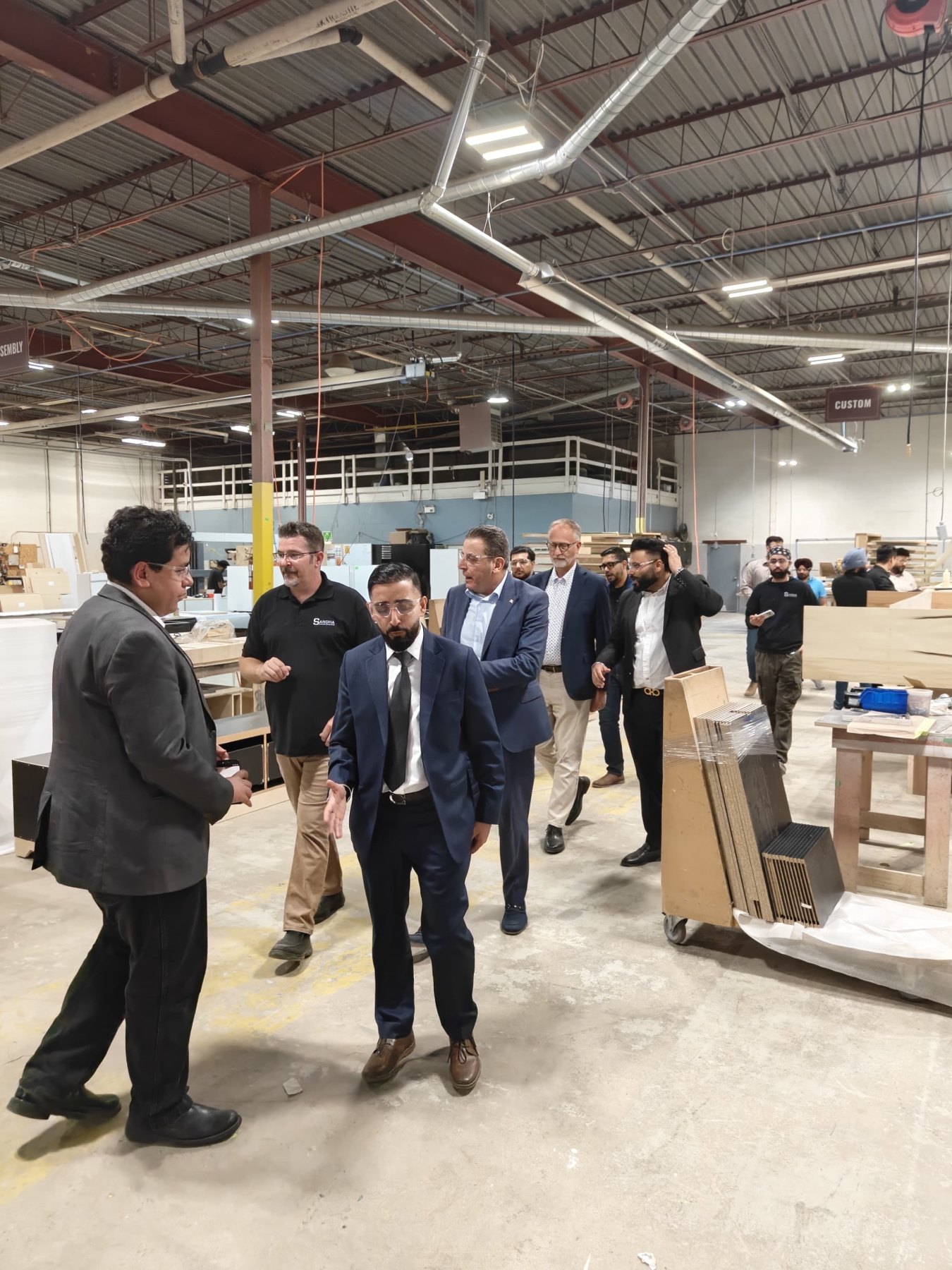
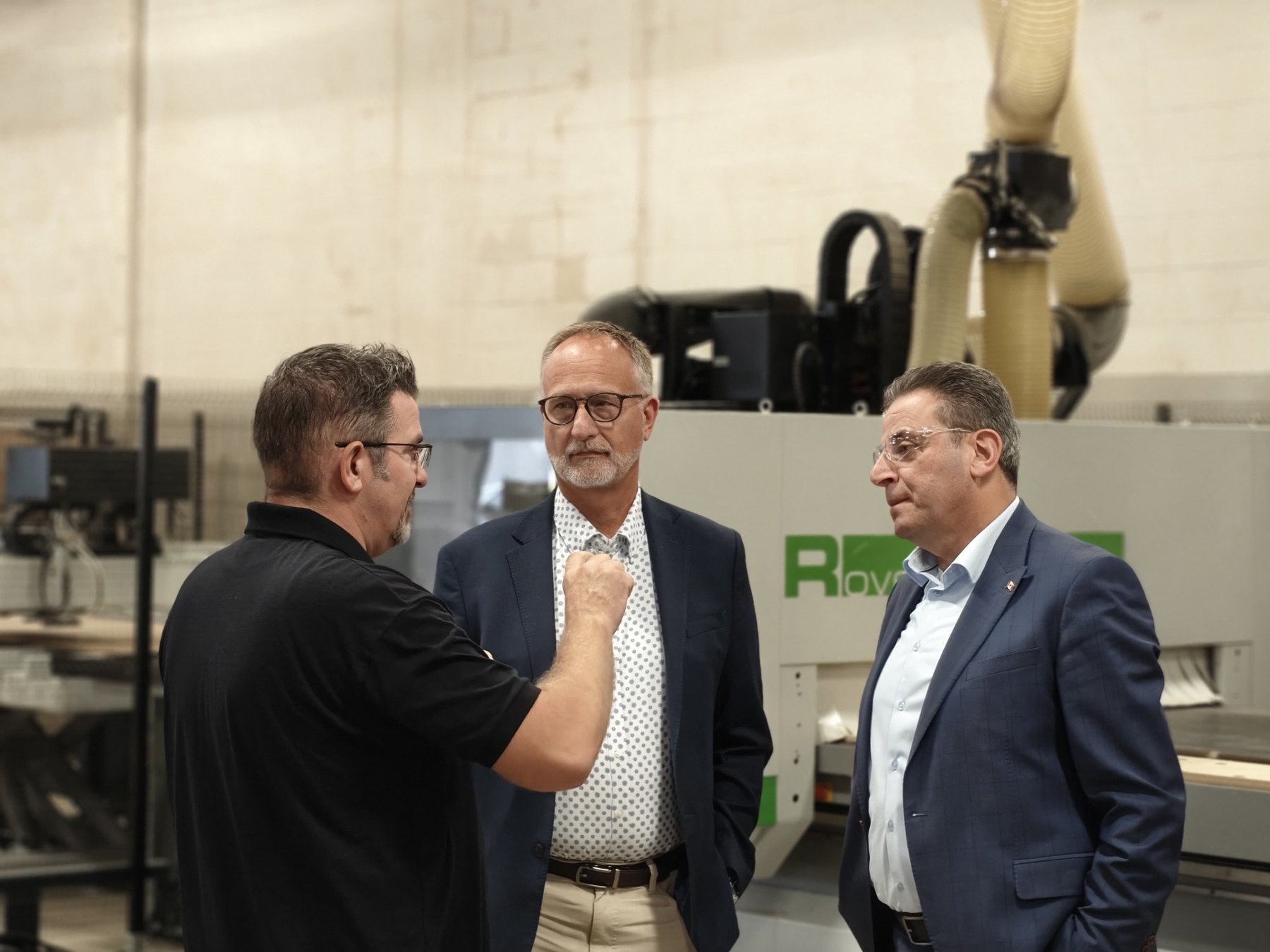
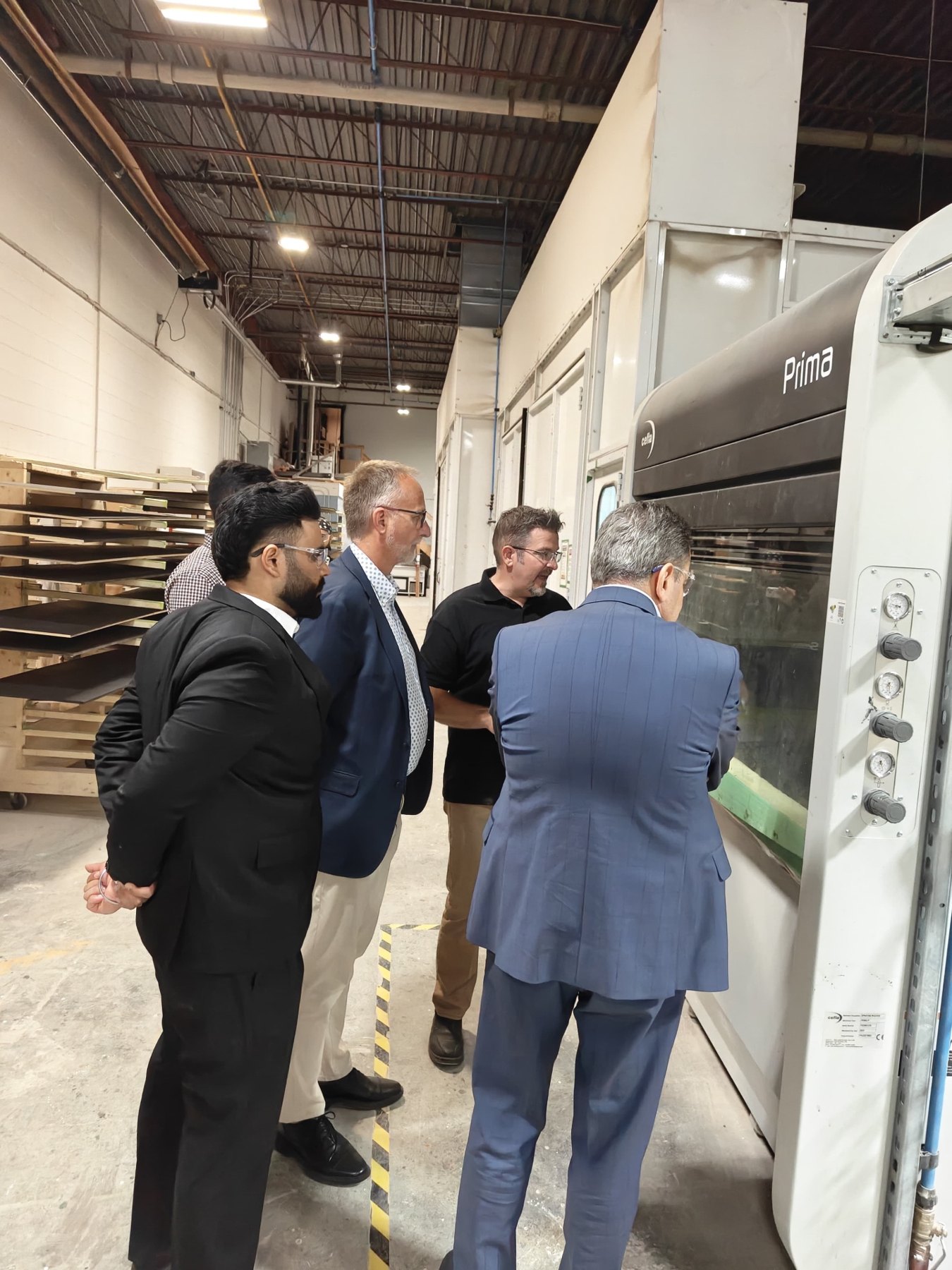
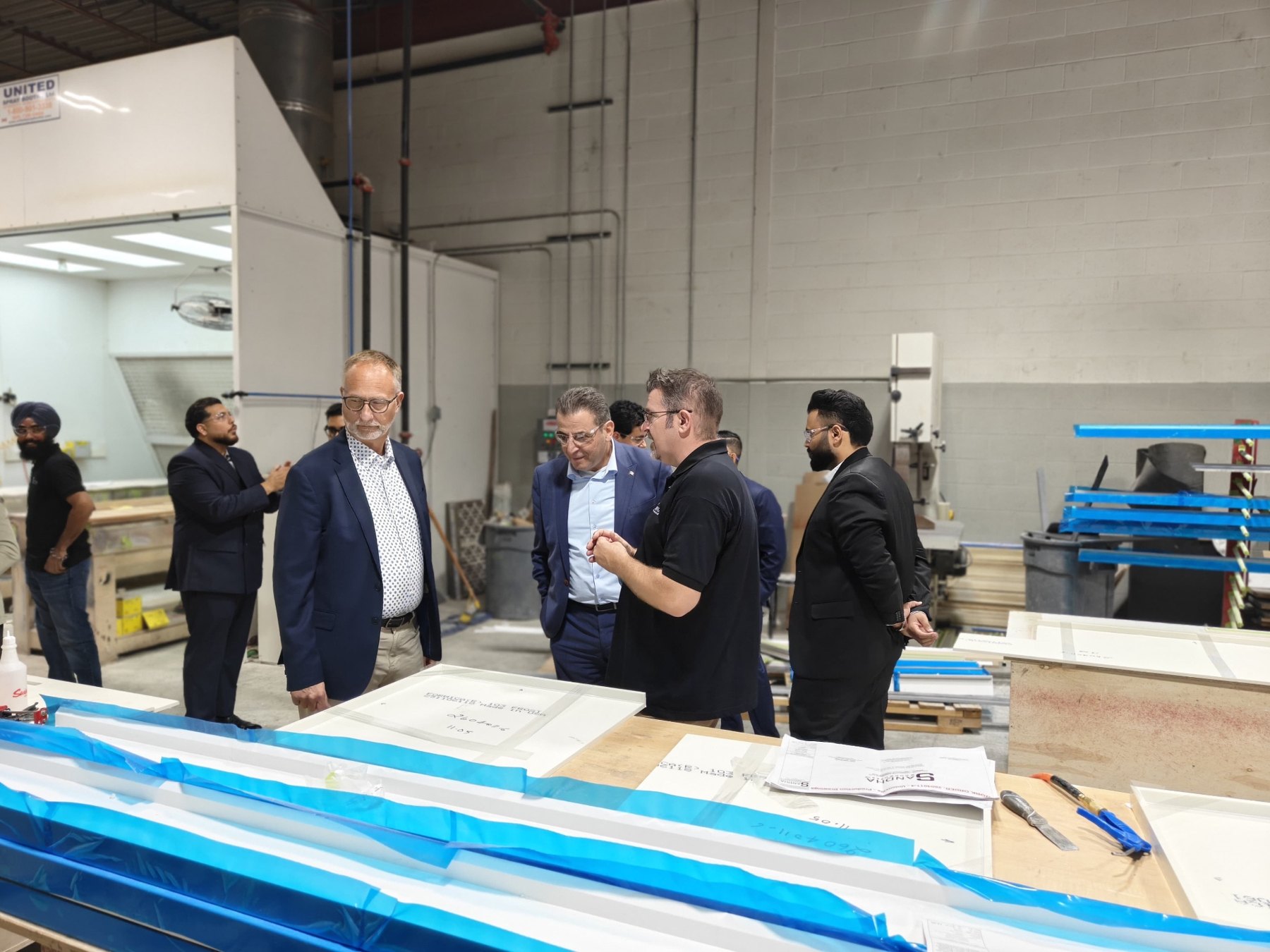
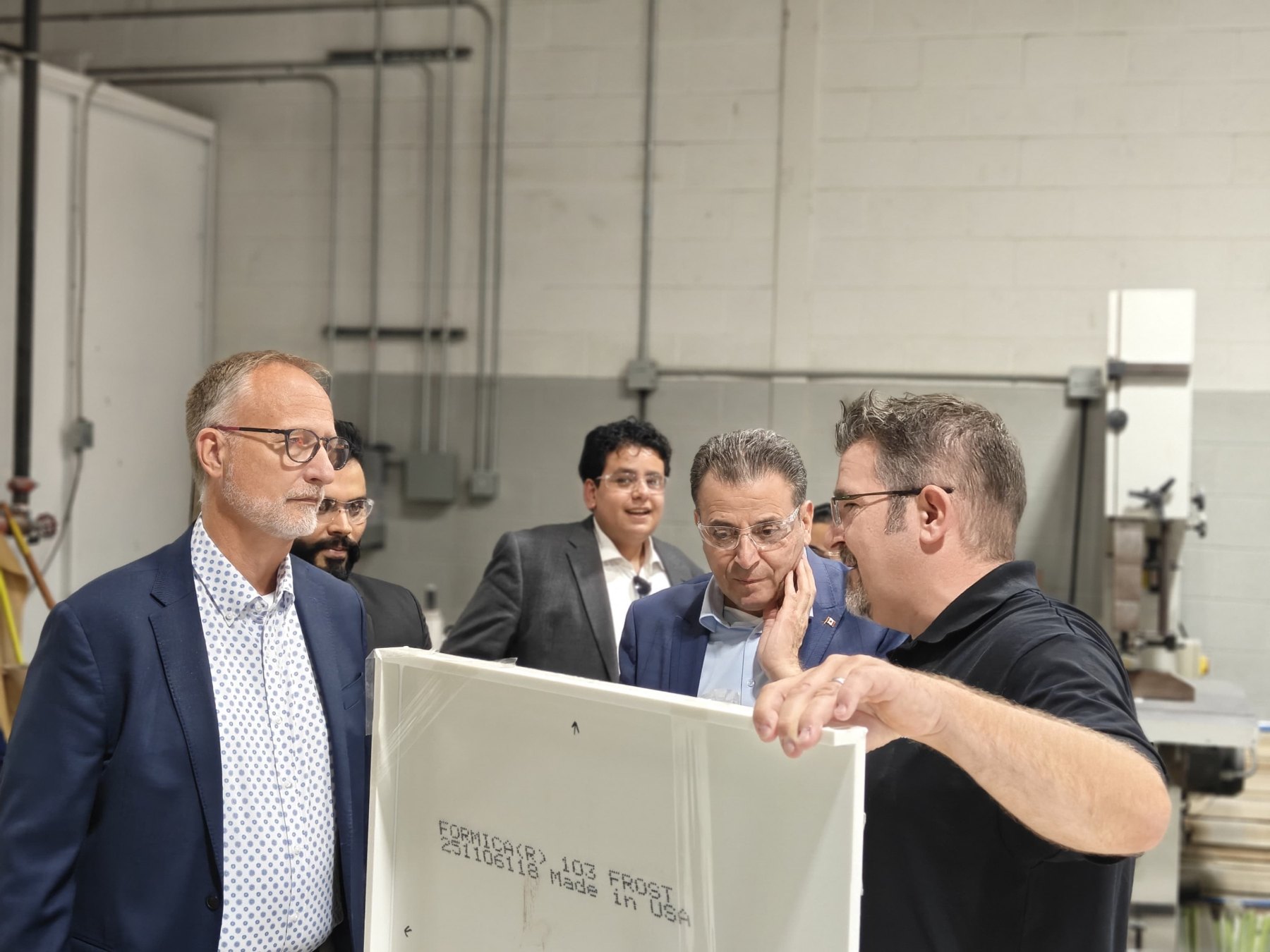
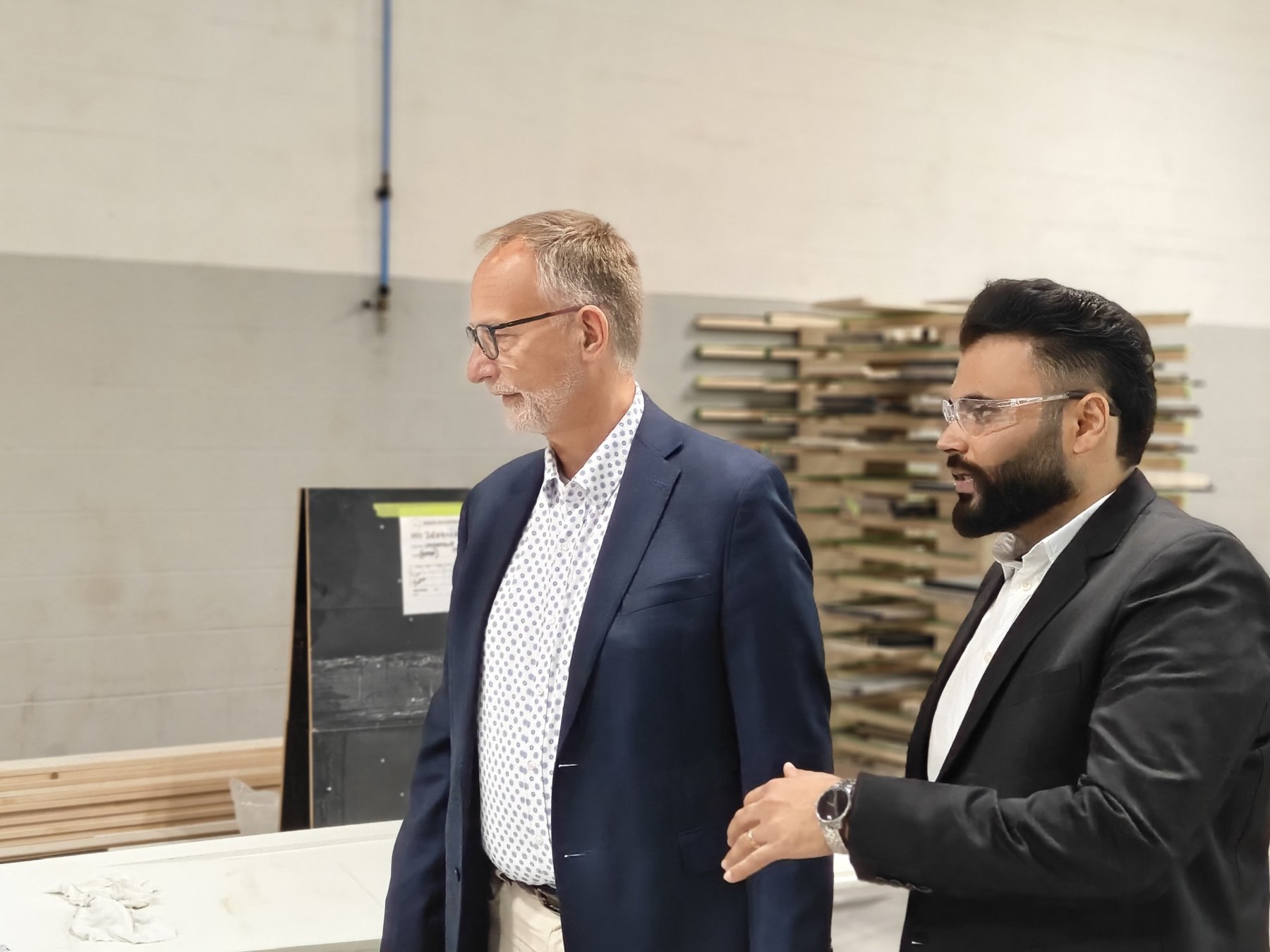
That was the setting for a recent visit to Sandha Woodworks' manufacturing facility at 121 Roy Boulevard in Brantford, Ontario. Brad Redekopp, Member of Parliament, and Ziad Aboultaif, Member of Parliament, toured the operation alongside visiting guest Ragy Missak and Khalid Ismail Syed, Outreach Advisor in the Office of the Leader of the Opposition. The delegation spent meaningful time on the floor, observing production areas and speaking with the people responsible for them. Visits like this rarely make headlines. Their value lies elsewhere: in replacing abstractions about industry with direct observation of how work is actually done.
Beyond the finished product
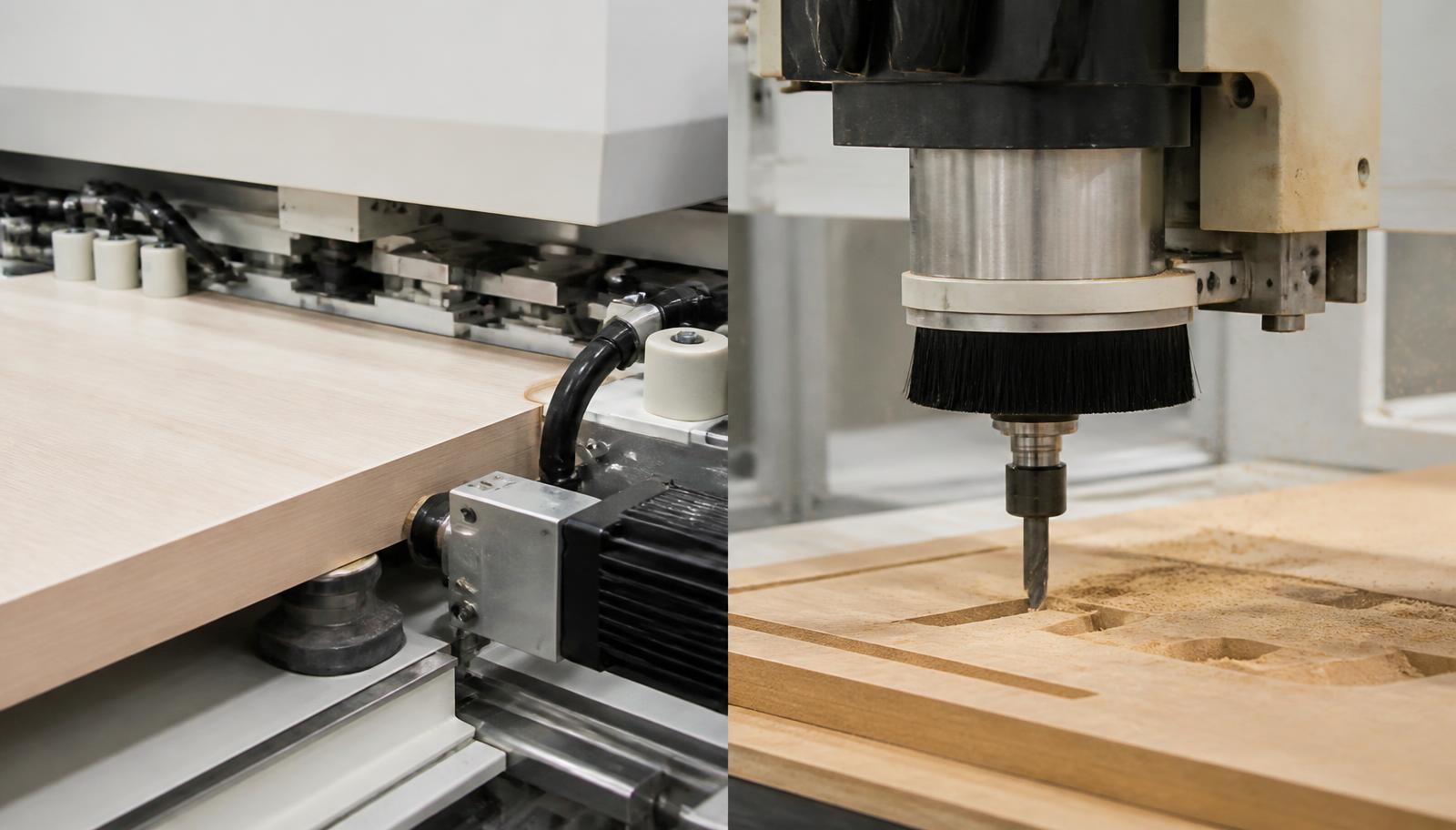
A healthcare reception desk, a retail fixture or a run of commercial casework is the visible end of a much longer process. Before any panel is cut, architectural drawings and specifications must be interpreted, resolved into shop drawings, and coordinated with the general contractor, designer and other trades. Materials are selected and procured against schedule. Engineering data drives CNC machining and panel processing; components are edgebanded, prepared and assembled; surfaces are finished; and every piece passes quality checks before it is packaged and sequenced for delivery and installation.
Each stage depends on the accuracy of the one before it. The facility tour offered the delegation a view of the work behind completed architectural interiors — the material staging, production areas and conversations among the people who keep that sequence moving.
From design to delivery
Commercial millwork depends on coordinated production stages rather than a single manufacturing operation. The sequence below describes Sandha Woodworks' general production process.
- 01Engineering
- 02Material Preparation
- 03CNC Manufacturing
- 04Assembly
- 05Finishing
- 06Quality Control
- 07Logistics
Technology is advancing. Skilled people remain essential.
Modern millwork manufacturing combines digital engineering, automated equipment, material handling and production planning. CNC machining, automated edgebanding and finishing systems bring repeatability and capacity that manual methods cannot match at commercial scale. Yet none of that equipment interprets a drawing, catches a dimensional conflict, judges a finish or solves an unexpected problem on its own.
Manufacturing technology can expand what a facility is capable of producing. Skilled people determine how reliably that capability is delivered.
This is why skilled labour shortages are not simply a hiring issue. When experienced tradespeople are scarce, the effect reaches further than an unfilled position. It limits a company's ability to train the next cohort, to retain technical knowledge accumulated over decades, to adopt more advanced equipment, and ultimately to expand capacity. Apprenticeships, vocational training, practical experience on the floor and closer collaboration between industry and educators are what turn new entrants into dependable craftspeople — and that pathway takes years, not months.
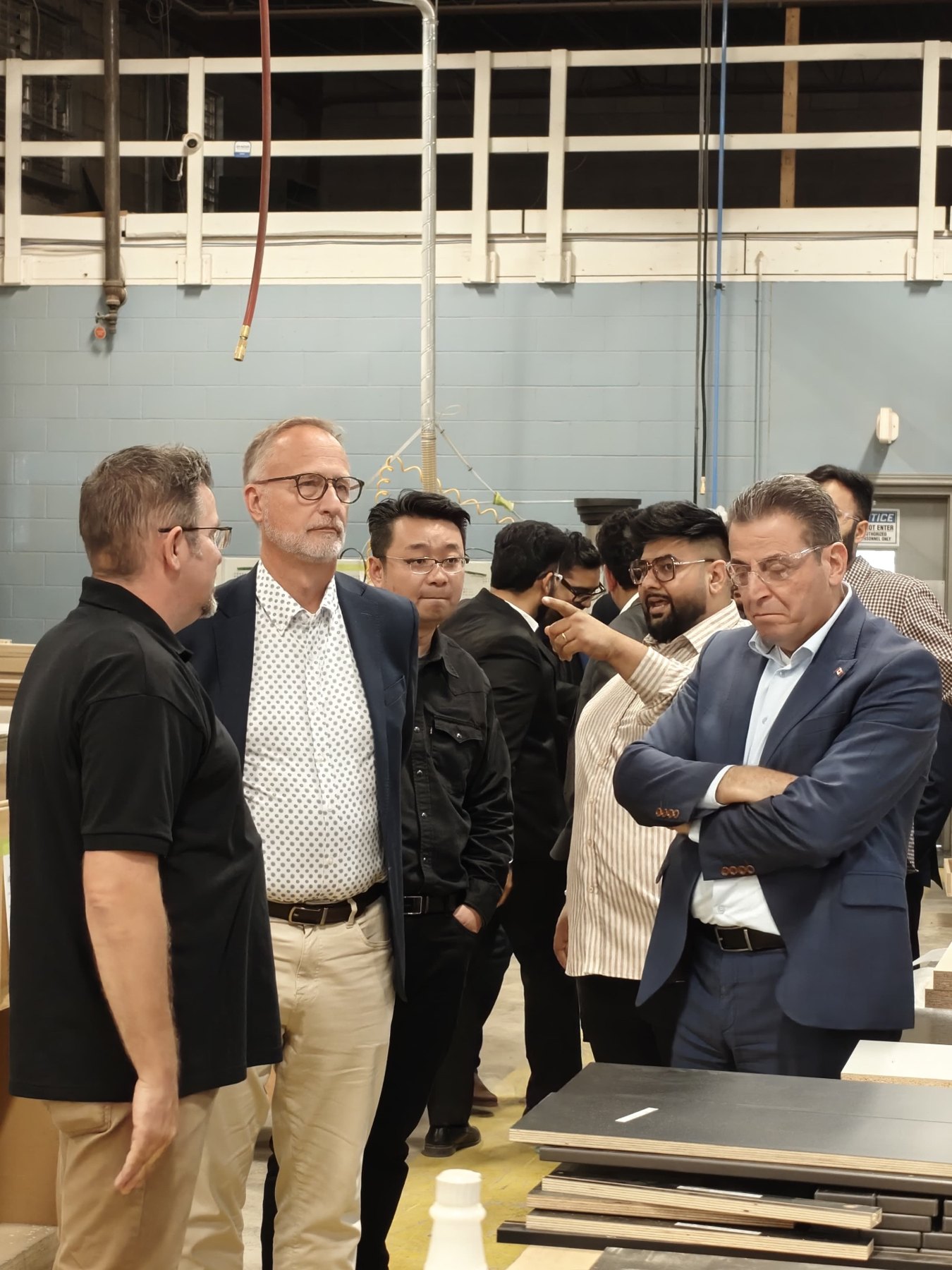
The future of manufacturing depends on more than machines. It depends on the people, skills, and systems that make those machines productive.
The competitiveness question facing Canadian manufacturers
Canadian manufacturers operate in an environment shaped by labour availability, material costs, equipment investment, production efficiency and rising customer expectations. Competitiveness in this context is not a matter of comparing hourly wages or submitting the lowest quotation. For the general contractors, developers and owners who depend on manufactured interiors, the real measures are reliability and predictability.
Reliable domestic production shortens supply chains and keeps engineering, manufacturing and installation teams within reach of the project. Efficient engineering and production reduce rework. Predictable delivery protects construction schedules. A stable workforce preserves quality from one project to the next. Sustained investment in modern equipment keeps capacity aligned with demand, and close coordination between manufacturing and construction prevents problems from reaching the site.
These factors reinforce one another. A competitive manufacturing sector needs both advanced technology and a sustainable skilled workforce; one without the other produces capacity that cannot be fully used, or skills that cannot be fully applied.
Why industry dialogue matters
For elected representatives, time on a production floor offers something briefing notes cannot: the chance to see operations directly and to speak with the people responsible for production and business decisions. The day-to-day concerns of manufacturers are often highly practical — recruiting and developing skilled people, maintaining productivity, financing equipment, and meeting increasingly complex customer and project requirements.
The visit to Brantford was an opportunity for that kind of firsthand understanding and constructive conversation. Meaningful conversations about manufacturing become more informed when they take place where manufacturing actually happens.

Building capacity for the next generation
Sandha Woodworks' approach to architectural millwork rests on engineering, manufacturing capability, craftsmanship, quality and reliable execution. Each project is carried by a single accountable project manager from award through engineering, production, installation and closeout — a model that depends as much on people as on process.
In that sense, developing people and improving production systems are not competing priorities. Better systems give skilled people more leverage; skilled people make systems perform as intended. The company's contribution to Canada's industrial capability is practical: commercial interiors engineered and built in Ontario, by a team that continues to learn on the floor every day.
A conversation worth continuing
Sandha Woodworks thanks MP Brad Redekopp, MP Ziad Aboultaif, Ragy Missak and Khalid Ismail Syed for visiting the Brantford facility and for the time they spent engaging with the team.
Canada's manufacturing future will be shaped not only by the technologies companies invest in, but by the people they develop, the capabilities they build, and the conversations that connect industry experience with long-term economic priorities. Visits like this one are a small but useful part of that work.
About Sandha Woodworks
Sandha Woodworks is a Canadian architectural millwork manufacturer based in Brantford, Ontario, providing engineering, manufacturing and installation of commercial millwork for healthcare, education, retail, hospitality and corporate interiors.